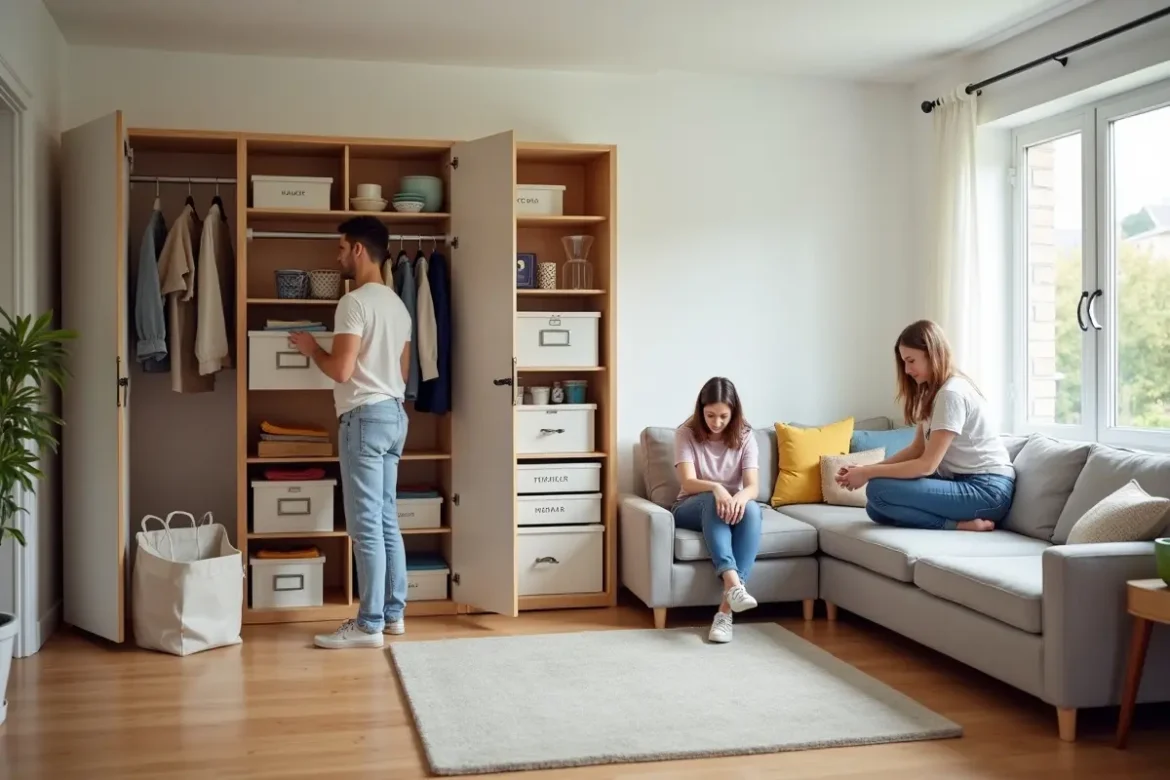
A busy household often fills up with items that seem to multiply overnight. From clothes and shoes to toys and everyday supplies, every corner can quickly feel crowded. A smart approach to storage helps turn disorder into a manageable and organized space that works for everyone in the home.
Simple changes can create surprising results. By rethinking unused areas, adding furniture with built-in compartments, and using bins that stack neatly, families can create order without sacrificing comfort or style. The following tips provide practical ways to make every room more functional and less cluttered.
Contents
- 1 Utilize vertical storage with wall-mounted shelves and hooks
- 2 Incorporate under-bed storage drawers for seasonal items
- 3 Use uniform-sized storage bins to maximize stacking efficiency
- 4 Install multi-functional furniture with built-in storage compartments
- 5 Designate specific zones for each family member’s belongings
- 6 Label containers clearly to simplify identification and retrieval
- 7 Conclusion
Utilize vertical storage with wall-mounted shelves and hooks
Homeowners can reclaim floor space by making better use of their walls. Wall-mounted shelves and hooks help organize items like coats, tools, or kitchen utensils without adding bulky furniture. This approach suits small homes or busy households that need more storage options in shared spaces. People who run out of room might consider closet organizers in New York, modular shelving units in Chicago, or Fayetteville storage container rental services for extra space outside the home. Tall shelves that reach near the ceiling maximize height utilization, open shelving allows quick access to everyday items, and hooks in entryways, garages, or laundry rooms keep frequently used objects within easy reach.
These methods not only reduce clutter but also make homes appear more orderly. A few sturdy racks or stacked shelves can turn bare walls into practical storage zones that stay easy to maintain over time.
Incorporate under-bed storage drawers for seasonal items
Under-bed drawers help make use of space that often stays empty. They create a simple way to store blankets, sweaters, or holiday decorations that are not needed year-round. This keeps closets open for everyday clothing and reduces clutter in other parts of the house.
Choosing drawers with wheels allows easier access, especially for heavier items. Clear or labeled containers help identify contents quickly without opening everything. For added cleanliness, drawers with fitted lids protect fabrics from dust.
Some households also raise the bed slightly with risers to create more room underneath. This small change can double storage capacity without altering the layout of the bedroom. Thoughtful placement and organization turn an overlooked area into a neat solution for seasonal storage.
Use uniform-sized storage bins to maximize stacking efficiency
Uniform-sized bins help households use space more effectively. Boxes that match in shape and size fit together without gaps, which creates a stable and tidy layout. This method also reduces the risk of boxes tipping over or items getting crushed.
Flat surfaces on the same-sized bins allow them to sit securely on top of each other. As a result, vertical space gets used better, and less floor area is wasted. Clear or labeled bins make it easy to find what is needed without opening every container.
Heavier items should go on the bottom, with lighter boxes stacked above. This structure protects fragile belongings and keeps stacks steady. Families who use consistent bin sizes notice faster organizing and faster access to stored items.
Install multi-functional furniture with built-in storage compartments
Multi-functional furniture helps busy households save both space and time. A coffee table with drawers or a sofa that lifts to reveal storage can keep rooms tidy without adding extra pieces. These designs make use of empty areas that often go unused.
A bed frame with built-in drawers works well in bedrooms with limited closet space. It provides a place for clothes, blankets, or shoes and reduces the need for bulky dressers. This approach simplifies cleaning and helps maintain an organized look.
In living rooms, ottomans with hidden compartments offer storage for remote controls, board games, or spare pillows. Wall-mounted cabinets and foldable desks also serve double duty by combining work or relaxation areas with extra storage.
Choosing furniture that serves more than one purpose also reduces visual clutter. As a result, homes feel more open and functional while still providing daily comfort.
Designate specific zones for each family member’s belongings
Each person in a household should have a defined space for personal items. This makes it easier to find what they need and reduces clutter around shared areas. A clear layout also helps everyone take responsibility for their space.
Families can assign areas such as shelves, drawers, or bins labeled by name. Children can keep toys or school supplies in one spot, while adults can organize work materials in designated areas. Labels or color codes help maintain order and avoid mix-ups.
Creating individual zones promotes better organization throughout the house. It sets simple boundaries that prevent items from piling up in one place. As a result, each family member contributes to a tidier and more efficient home environment.
Label containers clearly to simplify identification and retrieval
Clear labels help every family member find what they need without confusion. A well-marked box or jar saves time that might otherwise be spent searching through piles of items. It also cuts down on duplicate purchases because items are easier to track.
The best labels include short, easy-to-read names written with waterproof markers or printed stickers. For long-term storage, durable materials such as plastic tags or laminated labels work better than paper ones. In addition, using a consistent format for all labels keeps the entire system neat and easy to scan.
Color-coding adds another layer of organization. For example, one color can mark seasonal decorations, while another identifies tools or kitchen items. Storing labeled containers in logical groups further simplifies the process of finding and returning items. By labeling carefully, households create an efficient system that keeps clutter under control and makes daily tasks smoother.
Conclusion
A smart organization helps a busy household stay neat and functional. Every item has a place, and every space serves a purpose. A tidy home supports a calm and productive daily life.
Simple actions such as adding under-desk storage, using wall shelves, and sorting items by use create more room without extra cost. These methods work in both small apartments and larger homes.
Families that review their storage systems often keep their spaces efficient. Regular decluttering and maintaining organized zones save time and reduce stress.
By applying practical storage habits, any household can stay organized, use space wisely, and create a setting that feels open and orderly.