Looking to do your next big DIY project without killing your back?
Vertical material lifts are a popular choice for the do-it-yourself crowd taking on big renovations. These machines can hoist drywall, lumber and other bulky supplies to higher working levels quickly and easily.
But here’s the issue:
Most homeowners don’t know how to operate them safely. And the potential for mistakes can be deadly serious. Falls are the leading cause of workplace fatalities in construction related industries. Those hazards don’t go away when someone is working on their own property.
The good news is that with the right information and a little preparation DIY’ers can use vertical material lifts safely and efficiently.
Contents
Here’s What You’ll Learn:
- Importance of vertical material lifts for DIY projects
- Pre-operation inspection and safety checks
- Essential operating guidelines
- Choosing the right equipment for the job
- Mistakes to avoid when using a lift
Vertical Material Lifts and DIY Renovation Safety
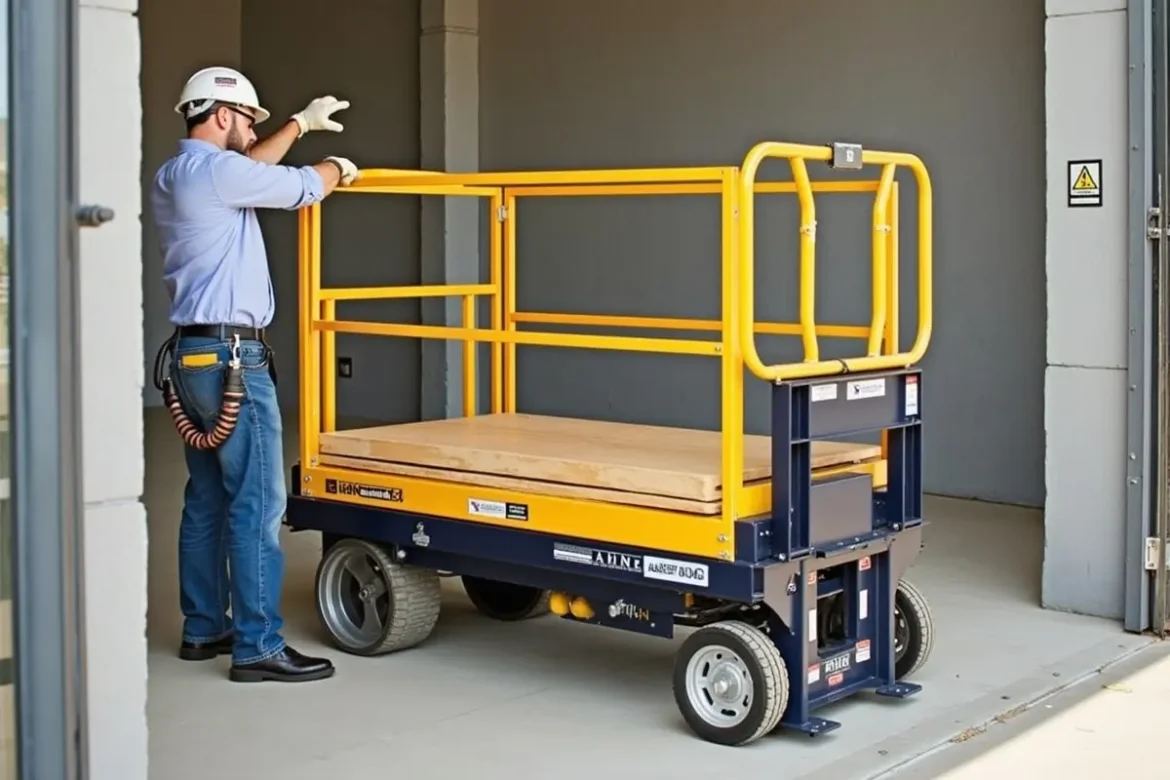
Vertical material lifts are simple devices with one purpose. They transport materials vertically to higher locations so workers don’t have to lift.
Ask yourself a question. Is it a good idea to carry plywood sheaths up a ladder? How about tossing bundles of shingles up on a roof? If these activities sound bad to you then you already have a feeling for when vertical lifts for raised platforms become a big help with DIY renovations.
Lifts of various sizes and capacities are made for a reason. The smaller models are tailored for residential use where space is often limited. The bigger models are for the larger commercial projects.
The most important thing is that they take the strain off the body while keeping materials secure during movement. Proper lifting and reducing fatigue make a difference in keeping DIY’ers safe.
Pre-Operation Safety Checks
Do not touch a single control without first conducting a detailed and comprehensive inspection.
The following items MUST be verified each and every time a lift is used:
- Verify ground surface: Lift must be placed on stable, level ground. Soft or uneven surfaces create hazards.
- Inspect safety features: Guardrails, gates and locks should be fully functional.
- Verify weight limits: Don’t exceed the maximum capacity of the lift.
- Test controls: Buttons and joysticks should respond smoothly.
This is not negotiable. According to the CDC’s National Institute for Occupational Safety and Health, an estimated 70% of fatal falls occurred with small operations involving fewer than 10 employees. DIY home renovations fall squarely in this group.
That is a major red flag. Without proper protocols the chance of injury goes way up.
Essential Operating Guidelines
Operating a vertical material lift is not difficult. It does take some focus and respect for the machine.
First, position the lift as close to the work area as possible. The less distance between work points and the lift’s target height the better.
Next, be sure to load all materials properly and centre the weight. Uneven or loose loads create tipping and shifting risks during use. Strap or tie down loose items.
Move slowly and avoid jerky or abrupt motions. Smooth operation is safest.
Never, and we mean never, load the lift with more weight than the manufacturer’s ratings allow. Just because you think you can take the abuse doesn’t mean it’s a good idea.
Finally, the work area should be clear while the lift is in use. This means nobody standing under or near a loaded lift. Items can shift at inopportune moments.
These tips are universal. The basic concepts apply whether the lift is in use for a DIY weekend project or a full scale renovation. The rules don’t change.
Choosing the Right Equipment
A vertical material lift is a significant investment. But choosing the right model for the job at hand is well worth the time and expense.
Keep these items in mind:
- Lift capacity
- Height requirements
- Platform size
- Power source
- Portability
Compact models typically offer the most value to the DIY crowd doing residential renovations. They can usually accommodate common home improvement materials while still being able to fit through doorways and access tight spaces.
Common Mistakes to Avoid
Errors in judgement happen even to the most experienced DIY’ers. Being aware of common problems is a great way to catch issues before they become accidents.
Never skip the user manual. Operators manuals are not made to waste time. They are made to help you avoid problems.
Never use a lift in inclement weather. Wind causes issues with load stability during operation. Rain makes surfaces slippery and that is always a bad combination. Work should stop if the weather becomes inclement.
Never work alone. A spotter or helper adds an extra set of eyes and additional safety. Safety doesn’t just happen. Helpers are there to help.
Never rush. Impatience causes shortcuts. Shortcuts lead to accidents. Slow and steady wins the race safely.
Never ignore maintenance issues. Even with rental equipment a quick check before use is important. Report any concerns immediately.
OSHA reports that Fall Protection is the most commonly violated safety provision in the construction industry for the 14th year in a row. This statistic demonstrates that people continue to fail to recognize the importance of proper fall protection measures when working at height.
Personal Protective Equipment (PPE)
PPE is not reserved for the pros. Anyone operating a vertical material lift should have the right gear on their person.
Basic PPE should include:
- Hard hat
- Safety glasses
- Work gloves
- Steel-toed boots
- High-visibility clothing
PPE should be worn during the entire process. It isn’t optional just when it’s convenient.
Summary
Vertical material lifts are game changers for the do-it-yourself crowd. The amount of work people can accomplish without killing themselves is a major shift.
But they are only as safe as the person operating them.
The important takeaways:
- Always inspect equipment prior to use
- Weight limits and loading instructions must be followed
- Stable and level ground is a must
- Keep work areas clear during operation
- PPE should be worn at all times
Serious DIY’ers take these points to heart. Projects get finished. Nobody gets hurt. That is always the objective.
Vertical material lifts are the DIYer’s power tool for home renovations. Used right they empower even ambitious projects. Used wrong they become hazards.
The decision is simple. Treat safety as a priority from day one.