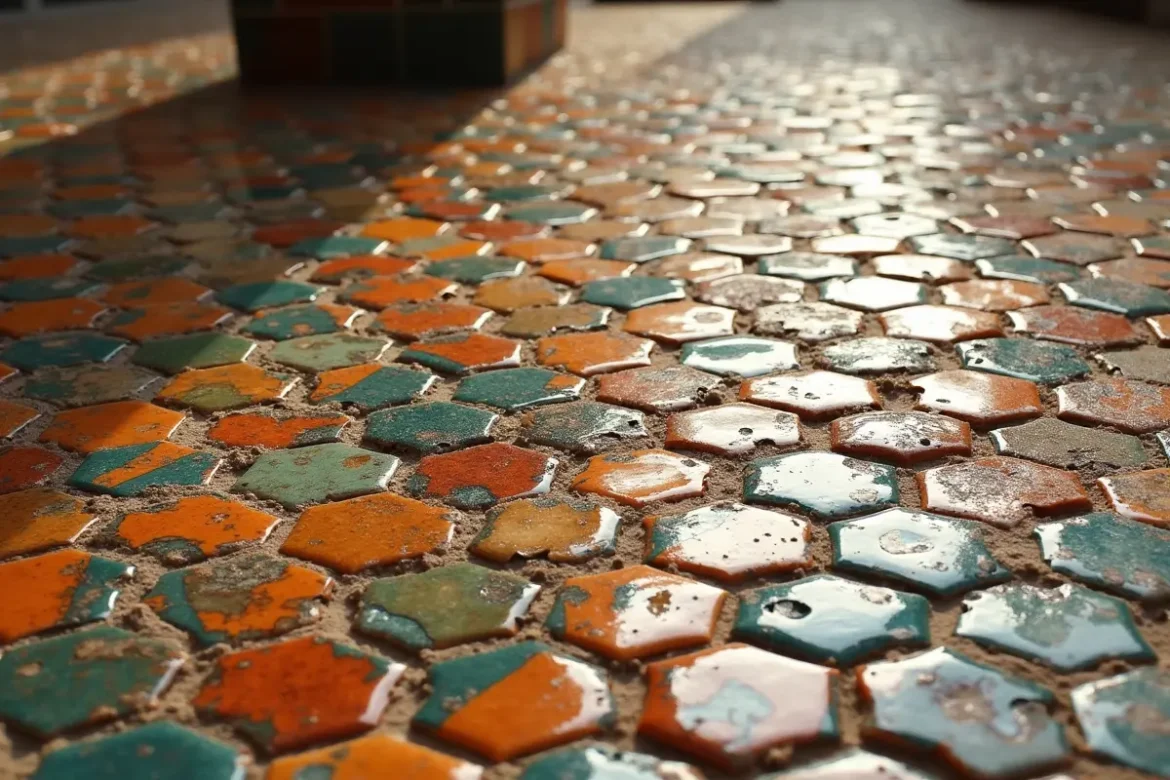
The design world is increasingly dominated by the flawless symmetry of mass-production, there is a profound, soulful pull toward materials that carry the unmistakable mark of the human hand.
Among these, the Moroccan zellige tile, pronounced zuh-leej, embraces imperfection but elevates it into an art form.
Unlike the clinical precision of a machine-made ceramic, true hand-cut zellige offers a depth, luminosity, and character that transforms a simple wall or floor into a living, shimmering tapestry of history and craft.
This isn’t merely a trendy tile; it is a centuries-old tradition, an authentic piece of Moroccan heritage that speaks of sun-drenched courtyards, ancient medinas, and the rhythmic hammer of a master artisan.
For those seeking to infuse their homes with authenticity, warmth, and a subtle, sophisticated patina, understanding the journey of zellige from earth to installation is essential.
Contents
The ancestral craft: from earth to tile
To understand zellige is to realize it isn’t just a material—it’s a mathematical and spiritual language written in clay. Rooted in 10th-century Morocco, zellige (from the Arabic for “little polished stone”) is a cornerstone of Islamic architecture and a protected form of global heritage.
Sourcing the soulful clay
Authentic zellige starts not with an industrial mix, but with raw, natural clay sourced almost exclusively from the fertile region around Fez, Morocco. This particular clay is known for its purity and plasticity.
The process of preparing it is incredibly foundational: the clay is soaked, kneaded by hand or foot to remove air pockets, and carefully purified.
Crucially, it is often not fully refined, which allows for minute, natural mineral deposits like -traces of lime to remain. When the tile is eventually fired, these natural elements can create tiny surface imperfections such as small pits or hairline cracks, known as crazing. Far from defects, these are the fingerprints of authenticity.
The unpredictable kiss of the kiln
After being hand-molded and sun-dried, zellige tiles are glazed with natural mineral pigments, applied by hand through dipping or brushing. This uneven application is intentional, creating layered depth before the tiles ever enter the kiln.
The defining moment comes during firing. Traditional zellige is fired in wood-burning or olive-pit kilns, where heat circulates unevenly.
The maâlem positions tiles knowing those closer to the fire will emerge with deeper, more saturated tones, while others retain softer, chalkier hues. This lack of temperature control is what gives zellige its signature tonal variation—no two tiles, even within the same colorway, are exactly alike.
Collections that are curated specifically for interior architectural use often undergo additional selection to balance tonal depth while preserving authentic variation.
This is why many specifiers gravitate toward exclusive glazed zellige collections by clè, where glaze recipes, firing outcomes, and colorways are intentionally assembled to reflect true Moroccan kiln behavior rather than flattening it into uniformity.
This makes them better suited for cohesive, high-end installations that still honor the craft’s inherent unpredictability.
The hand-cut signature: why uniformity is an imitation
The final, defining step and the subject of this article’s core distinction is the hand-cutting process. After the second firing, the glazed clay squares are handed to the master cutter.
The menqach and the maâlem
The artisan uses a specialized, ancient tool called a menqach, a sharp hammer and chisel combination. Holding the tile in one hand, the maâlem expertly scores and chips away the excess clay to form the final shapes:squares, rectangles, octagons, stars, and tiny geometric puzzle pieces, all by eye and hand.
This is the key differentiator from machine-made tiles, and the source of zellige’s celebrated “imperfection”:
- Irregular edges: The hand-cut nature means the edges are never perfectly straight, square, or uniform. They are slightly beveled, chipped, and organic. This irregularity is critical because, during installation, these edges naturally create a very tight, minimal grout line (often 1-2 mm), which allows the subtle variations in the tile surface to dominate the visual field.
- Dimensional variation: Each final tile is unique in its size and thickness. A “10×10 cm” Zellige tile is a nominal measurement; in reality, pieces will vary slightly, which demands the skill of a seasoned installer.
- The luminous effect: When installed, the combination of hand-applied glaze, uneven firing, and irregular edges allows light to catch each tile’s surface at a slightly different angle.
The result is a wall that shimmers and appears to move ; a dynamic, liquid-like surface that flat, factory-cut tiles can never replicate. This living surface is what gives zellige its incomparable, tactile elegance.
Design insight: integrating perfect imperfection
For anyone interested in design and real-world application, the challenge of zellige is not its beauty, but its translation into a modern living space. It requires a mindset shift from expecting mass-produced perfection to embracing curated variation.
The blending imperative
Any seasoned designer or contractor working with zellige understands that the first step upon receiving the boxes is to blend the tiles.
Because of the intentional color variation from the kiln, simply pulling tiles from one box after another will lead to large patches of similar tones.
The tiles must be mixed from all boxes and deliberately laid out to achieve a harmonious, balanced flow of color and luminosity across the entire surface. This blending process is an act of artistry that respects the tile’s handcrafted journey.
Installation: skill, patience, and trust
Installing zellige is not a job for a novice tiler. The inherent irregularity of the hand-cut pieces means that each tile must be individually positioned and adjusted.
Real-World Insight: Due to the uneven edges, zellige tiles are typically butted up close to one another with minimal joint spacing. The resulting irregular, shallow gaps are then filled with grout.
An experienced installer treats the process like a mosaic, placing each piece not just by measurement, but by visual judgment, ensuring the unique size of each tile contributes to the overall, rich texture. This meticulous process is what accounts for the higher installation cost, but it is a non-negotiable step for achieving the authentic look.
Beyond backsplashes: versatile applications
While zellige is renowned for kitchen backsplashes and bathroom walls, where its reflective glaze truly shines;its application is surprisingly versatile:
- Shower surrounds: The material is durable and water-resistant when properly sealed and installed, creating a luxurious, spa-like feel with incredible depth.
- Fireplace facades: Used on a fireplace surround, Zellige introduces a focal point with palpable texture, grounding the room with an ancient, earthy quality.
- Flooring (Low-Traffic): While the unrefined clay can be more porous than porcelain, Zellige can be used on low-traffic floors, such as powder rooms, where the tactile surface adds tremendous character underfoot.
The investment: value over cost
Zellige, undeniably, comes at a higher price point than its machine-made counterparts. This difference, however, is not just a cost, but an investment in provenance, preservation, and authenticity.
- Supporting heritage: Every purchase supports the maâlems and small ateliers in Fez, preserving a thousand-year-old, labor-intensive craft that is passed down through generations.
- Sustainability: Authentic zellige is made from locally sourced, natural, unrefined clay and mineral pigments. The process is low-tech and low-waste; broken pieces are often reground and repurposed, aligning perfectly with contemporary sustainable design values.
- Timelessness: Zellige is not a trend; it is a material that has graced palaces and mosques for centuries. Its rich, organic variations ensure it will age gracefully, developing a natural patina that deepens its character, offering an enduring aesthetic that will not look dated in a few years.
Preserving the hand-cut soul
Today, zellige is recognized as a vital part of Morocco’s national identity. By choosing authentic, hand-cut tiles, you aren’t just choosing a finish for a backsplash; you are participating in the preservation of an ancient craft.
In an era of “fast-design,” zellige is the ultimate slow-build material; an act of design intentionality that values a thousand-year-old human story over factory-made perfection. It’s an act of design intentionality, a willingness to slow down and value the hand-cut edge, the tonal shift, and the tiny pinhole that tells the rich, human story of the tile’s origin.
It is the perfect antidote to the coldness of modern mass-production, offering warmth, light, and history to the walls of the modern home.