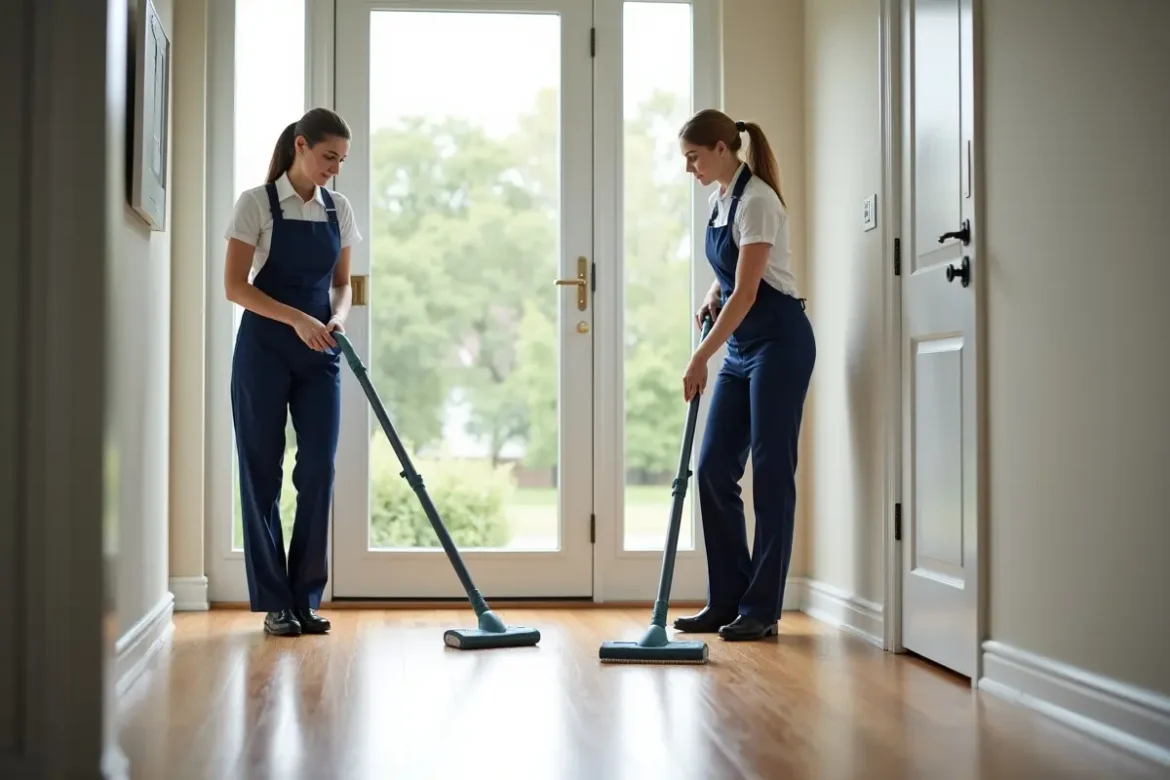
A clean office is not the same as an office that looks clean for an hour. People notice the difference fast. The entry glass is hazy. The break area starts to smell by mid-morning. Restrooms feel “off” even if someone was in there the night before. And once those little signals stack up, the whole workplace feels neglected, which is why having your office professionally cleaned makes such a noticeable difference over time.
Commercial office cleaning works when it runs on a simple rhythm built around a consistent cleaning schedule, not a never-ending task list. You do a few things every visit that protect hygiene and first impressions, then you rotate deeper work on a predictable schedule. That’s how cleaning stays consistent without turning into an expensive, overbuilt program.
Here’s a practical framework you can use to tighten scope, reduce complaints, and make results more repeatable.
Contents
- 1 The Monday-Proof Rhythm
- 2 What matters most when time is limited
- 3 The scope questions that prevent “wipe and go” cleaning
- 4 A quick mini case study that feels familiar
- 5 Common mistakes that make an office feel dirty even after cleaning
- 6 Quick checklist you can actually use
- 7 The real goal is consistency
The Monday-Proof Rhythm
Instead of trying to “clean everything” every time, think in three passes:
1) Reset work (every visit)
This is the baseline that keeps the office feeling cared for day to day. Restrooms, trash, obvious smudges, and the break area are the core. If these slip, nothing else can save the experience.
2) Detail work (once a week)
This is the layer that stops the office from slowly looking tired. Think interior glass that needs a real clean, dust that builds up in plain sight, and the edges that don’t get touched during quick resets.
3) Deep work (once a month)
This is for the stuff that protects surfaces long-term: floor care, high dusting, and the areas that quietly collect grime until they become “the office smell.”
This rhythm is simple on purpose. It reduces confusion, makes pricing clearer, and creates fewer missed expectations. It also helps janitorial services deliver consistent quality because the plan is built around repeatable outcomes, not vague promises.
What matters most when time is limited
Most offices do not need more cleaning. They need better priorities.
If you have to choose where effort goes, focus on spaces that create the strongest reaction:
Restrooms come first. Not because they’re glamorous, but because they drive complaints and affect trust instantly. Break areas are next because food, moisture, and shared sinks create odors and sticky surfaces faster than people realize. After that, it’s anything shared: door hardware, conference room touchpoints, and common equipment.
Floors matter, but they are often mismanaged. Offices either obsess over floors daily while ignoring high-touch areas, or they do the opposite and let floors slowly degrade until replacement becomes the only option. The balanced approach is simple: keep traffic lanes presentable during resets, then schedule real floor care on the deeper cycle.
The scope questions that prevent “wipe and go” cleaning
If you want commercial office cleaning to be reliable, the scope must be specific enough that two different people would do the work the same way.
A strong scope answers four questions:
What happens every visit versus weekly versus monthly?
If that’s not written, the work becomes memory-based. Memory fails.
What does “done” look like?
Not in poetic language. In obvious, checkable outcomes. Think “restroom mirrors are streak-free” and “no visible debris in main walkways.” Simple standards cut arguments and improve consistency.
Who owns supplies and restocking?
This is where offices lose time. If soap and paper products run out and nobody is clearly responsible, cleaning “quality” gets blamed for a management gap.
How are issues caught and corrected?
You do not need a complex reporting system. You need a predictable one. A short weekly walk-through using the same checklist beats a long email thread once a month.
If your plan includes disinfection, it’s beneficial to set expectations that align with official public health guidance. This guidance clarifies when cleaning alone is sufficient and when disinfection is truly necessary. For straightforward information on this topic, refer to the guidance on when and how to clean and disinfect a facility.
A quick mini case study that feels familiar
Picture a standard office with a steady stream of small complaints: “The restroom smells again.” “The kitchen counters feel sticky.” “The conference room glass looks streaky.”
Cleaning is happening, but the results are inconsistent.
The fix is not “clean harder.” It’s removing ambiguity.
The office switches to the Monday-Proof Rhythm. Restrooms and the break area are treated as non-negotiables every visit. Glass and dust are assigned to a weekly detail day. Floors get a monthly deeper cycle instead of random “when someone remembers.”
They also add one simple habit: a 10-minute weekly check using the same few standards every time. Restrooms, break area, entry glass, and main traffic lanes. That’s it.
Within a month, complaints drop sharply. The office didn’t become a hotel. It became predictable, which is what people actually want from office cleaning services.
Common mistakes that make an office feel dirty even after cleaning
Trying to do everything every visit
This usually leads to rushed work. A rhythm beats a sprint.
Overusing harsh products
Strong smell does not equal clean. It can also leave residue, irritate employees, and damage finishes over time.
Skipping the “boring edges”
Corners, baseboards, floor edges, and the space behind restroom fixtures are where offices start to feel grimy. If these never get scheduled, the office slowly looks worse, even if the desks are wiped.
No feedback loop
If the first time anyone hears about a problem is when someone is annoyed, you’ll keep repeating the same cycle. A quick weekly check prevents that.
Quick checklist you can actually use
If you’re hiring or resetting a cleaning plan, keep it simple:
- Can the cleaner explain what happens every visit, every week, and every month without guessing?
- Are restrooms and the break area treated as the priority zones?
- Are the expected results described in plain, checkable terms?
- Is supply ownership clear, so restocking does not fall through?
- Is there a basic inspection routine so issues get caught early?
That’s enough to avoid most of the common breakdowns.
The real goal is consistency
Commercial office cleaning should feel boring in the best way. No surprises, no recurring complaints, no slow decline where everyone pretends not to notice.
If your current plan is producing mixed results, tighten the scope, adopt the Monday-Proof Rhythm, and add a short weekly check for one month. You’ll learn quickly what needs adjusting, and the office will feel better without turning cleaning into a major project.
If you want a next step that’s still low effort, start by rewriting your scope into “every visit, weekly, monthly” and compare it to what’s actually happening. That small change alone usually improves results fast.