Gas heating may seem cheaper and familiar, but when you put a reverse-cycle system alongside maintaining or replacing an existing one, the game has changed. For many homeowners with both ducted gas and ducted cooling already installed, the cheapest and easiest replacement will almost always be a new reverse-cycle system.
Why reverse-cycle systems beat gas on efficiency alone
A reverse-cycle air conditioner operates differently. It doesn’t need to burn anything to create warmth. Instead, it harnesses heat from the outside air and transfers it into your home, no matter how cool it is outside. This is achieved by using a refrigerant cycle, which is essentially the same technology that your refrigerator uses, just in reverse. These are the reasons why the efficiency values for these systems are so much higher than combustion heating.
Even high-efficiency gas heaters convert only about 70-90% of their fuel into heat that you can use – the rest goes out the flue as exhaust. Reverse-cycle systems, in stark contrast, give you 300-400% of your Coefficient of Performance (COP) as heat. If your unit has a COP of 4, it is giving you four watts of heat for each watt you put in. This measure of efficiency is what you want to ask about when you’re shopping around. A higher COP means more bang for your watt, and it’s the main reason that electrical heating, in terms of running costs, has surpassed gas.
This isn’t a small advantage. It’s the difference between a system that carelessly sheds a third of the energy you give it, and a system that effectively triples it.
The real cost comparison, not just the sticker price
Homeowners may hesitate when faced with the initial outlay for a reverse-cycle purchase, particularly in regard to ducted systems in larger homes. We get that. But if viewed holistically, the total cost is more than just the cost of purchase.
Similar to gas heating, there are other costs associated, unseen though they may be. These include a supply charge on every bill, connection fees on your new build if you’re extending gas, and the replacement cost of an old gas heater or hot water unit. Electric has no connection fees beyond your existing electricity account, and given the tilt in energy tariffs towards efficient electric appliances, these hidden costs only grow. For households in the ACT looking to upgrade correctly, Reverse Cycle Heating Services Canberra can handle everything from load calculation to maintenance, which matters when the difference between a good and mediocre install can be hundreds of dollars a year in running costs.
Over a typical 12-15-year unit life, no supply charge and higher efficiency often make a reverse-cycle solution overall cheaper, even if the purchase price is higher. If you’re planning to gas out at some stage, the numbers get even better, as you’re no longer paying the supply charge you never actually used.
No, electric heating will keep you warm in a cold snap
There is a misconception that reverse-cycle systems are not effective when the temperature drops below freezing. While this used to be the case with older models, modern reverse-cycle systems are specifically designed to operate effectively in cold climates, using technology that can maintain heating capacity even when temperatures drop below zero.
This is particularly important for a city like Canberra, where we have cold winters and very hot summers. A well-sized modern reverse-cycle system will be able to provide all the heating you need on those frosty mornings, as well as efficient cooling during summer. It’s a one-stop-shop for all your heating and cooling needs. In fact, the fact that they can do both so well is one of the reasons why so many households are now throwing out their old gas heaters and separate air conditioners and replacing them with a reverse-cycle system.
The air quality upside nobody talks about
Turning off gas combustion indoors has benefits beyond lowering your bill. It eliminates a source of indoor air pollution you probably weren’t even aware of until now.
Gas heaters emit low levels of nitrogen dioxide and carbon monoxide, according to even the best of maintenance schedules. In a room with little fresh air, that can make you quite ill. Reverse cycle gives off none of those, for the simple reason that there’s no flame, no unburned fuels; and no exhaust. You’ll also enjoy better control of winter humidity: electric systems don’t run the risk of over-humidifying the air (as some gas heating can). If you have kids, older relatives, anyone with respiratory issues – this is a real and underappreciated factor.
Sizing and insulation matter more than the brand of unit you buy
This is something most tradespeople really wish you understood before you bust open the piggy bank: the single biggest contributor to your comfort and running costs isn’t actually your system, it’s your house.
Install a unit that’s too small, and it’ll run constantly and never quite keep up, which is going to cost you. Install one that’s too large, and it’ll short-cycle, wearing out faster and costing you more to run over its shortened life than a properly-matched system.
Problem is, to size a heating and cooling system – and a lot of us size them wrong – requires a proper HVAC load calculation that takes into account the size of your house, the way it’s oriented, how much window you have, and how insulated and leaky it is, not a rough guess based on the square metres you intend to heat or cool.
So before you put that money into a bigger or a more expensive system, spend a little on better insulation and draught-sealing. Poor sealing and insulation – gaps around doors and windows, bad ceiling insulation, single-glazed windows – all conspire to force your heating and cooling system to work harder than it should. Fixing that often means you can go with a smaller, cheaper system and get better comfort than you would from a larger heater or air conditioner fighting against a leaky house.
Getting the installation right
Reverse-cycle systems are not as simple as just a plug-and-play swap, and the nitty-gritty of how they’re installed matters a lot more than most of the buying guides you’ll read let on.
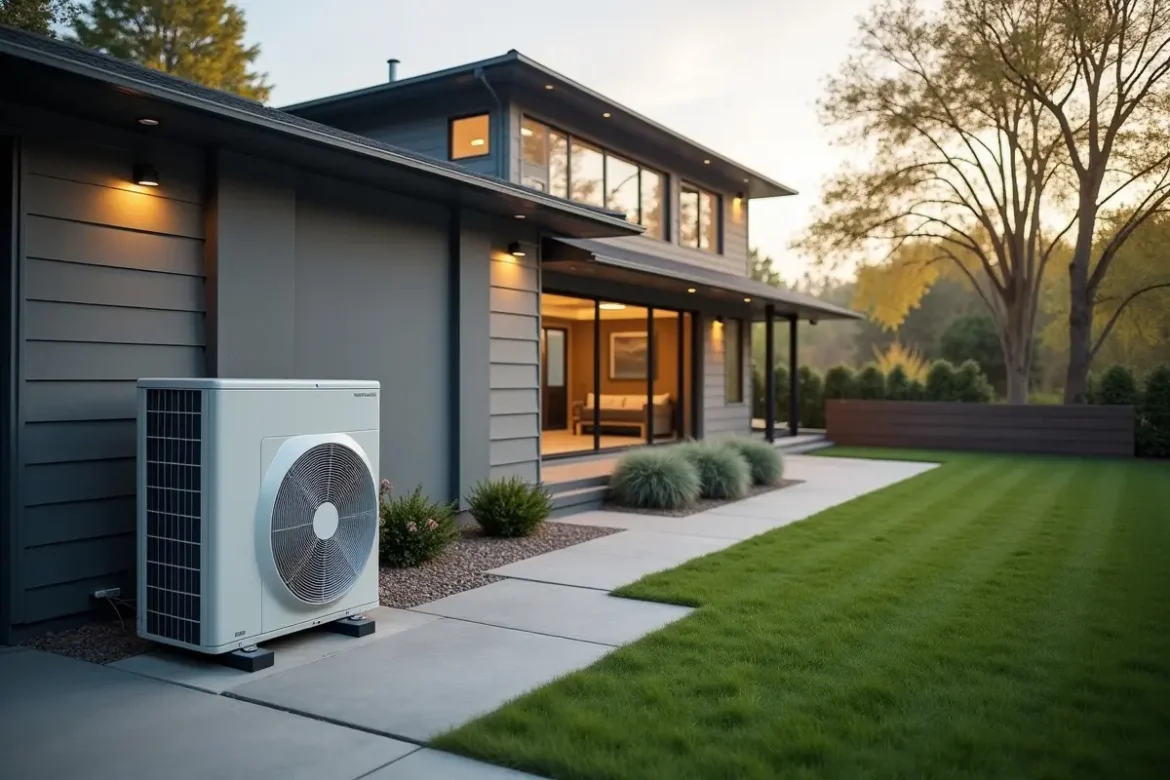
Is there enough available space in your electrical panel to even add a new circuit? This is especially pertinent for ducted systems, as they have larger compressors. Where you place the outdoor unit impacts efficiency and noise. For optimal performance, it needs enough room to breathe, and you don’t want it stuck against a wall that traps and radiates heat. Finally, having a clear plan for how and where condensate will be drained is vital, specifically to internal units that are roof-mounted.
Since these things are essentially big heat pumps, you’re working with a pressurised refrigerant. The ozone layer would like you to ensure installation and servicing is done by a licensed technician, but so would your wallet. An undersized system, poorly located, or one that’s never been correctly commissioned will never touch the COP figures quoted on the brochure. This is where a lot of DIY-inclined people make mistakes.
Ducted or split system: which one fits your home
When deciding between ducted and split systems, what it will often come down to is floor plan, whether you already have an existing system in place, and just how much control over your zones you’re looking to have.
Split systems are cheaper to purchase up front, easier to install if you’re adding to or retrofitting a house that lacks ducts, and offer precise control over which rooms are being heated or cooled. They will often be the best choice for smaller properties or those just looking to improve one room or zone at a time.
Ducted systems are more expensive initially and will require ceiling space for ducting, but they allow you to create a much more visually attractive solution to heating or cooling the entire house as they work from vents hidden in the ceiling with no wall units. If you’re already planning to renovate and your home suits the ceiling space required for ducting, this will likely provide the most visually appealing result and the best overall house comfort. Regardless of your choice, a smart thermostat and zoning control linked to your system will make sure that you’re not paying to heat or cool the whole house when only one area really needs it – and that’s going to minimize ongoing costs no matter which overall system you decide on.
Rebates make the switch less daunting
Upfront cost is still the biggest barrier for a lot of households, but there’s more support available than most people realise. Government rebate programs exist for electrification more broadly, covering reverse-cycle system installs, home insulation upgrades, and solar PV. These programs change over time and vary by location, so it’s worth checking what’s currently on offer before you budget for the switch, since a rebate can shift the upfront cost equation significantly.
Solar PV is worth planning alongside your heating upgrade even if you can’t afford both at once. A reverse-cycle system paired with solar generation can slash the electricity cost of heating and cooling to near zero during daylight hours, and batteries extend that benefit into the evening. Even without solar, the electrification of your heating still cuts household carbon emissions by moving you off combustion entirely.
A phased plan that won’t break the budget
You don’t need to rip out every gas appliance in one weekend. A sensible approach is to start with your oldest, least efficient equipment first, usually an ageing gas heater or a failing window air conditioner, and replace it with a properly sized reverse-cycle unit.
From there, tackle insulation and draught-sealing if you haven’t already, since this reduces the load on whatever system you’ve just installed. If a full switch away from gas is the goal, plan the disconnection once every gas appliance, including hot water, has an electric replacement, so you’re not paying a standing gas charge for a connection with no purpose. Solar and battery storage make sense as a later step once your heating and cooling load is locked in and you know what your electricity usage actually looks like.
Keeping it running well for the long haul
A reverse-cycle system that is regularly serviced will maintain its performance for the full term of its 12-15 year life. That includes cleaning or replacing filters every few months, ensuring that outdoor coils are free of leaves and debris and checking that condensate drainage is not blocked.
An annual professional service is recommended. They will check the refrigerant charge, inspect electrical connections, and hopefully catch a capacitor that’s on its way out before it does on a Sunday afternoon in February. Skipping this is how most homeowners end up with a system that’s been running below rated efficiency for ages without anyone knowing.
The move to all-electric heating and cooling is not a fashion statement. It’s a genuine step up in comfort, air quality, and even running costs so long as the system is sized and installed properly in the first place. Get the fundamentals as they were intended and the rest follows.