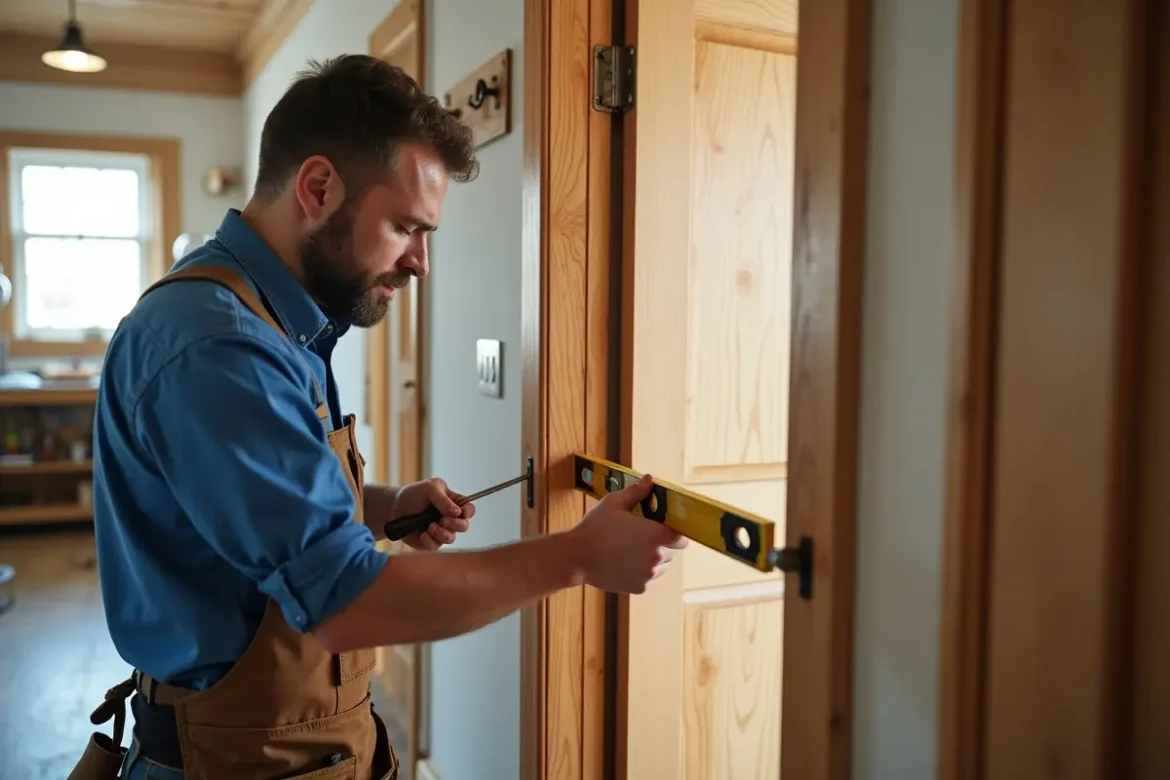
Ever tried to close a door only to hear it scrape against the floor? Or maybe you have to lift the doorknob just to get it to latch? A sagging door is one of the most common and frustrating home maintenance issues.
Over time, gravity, heavy use, and seasonal shifts pull your door out of alignment. The good news? You do not need to call an expensive handyman or buy a new door. You can fix a sagging door yourself in less than 20 minutes with tools you already own.
Here is your ultimate, beginner-friendly guide to getting your door back on track using standard woodworking hand tools for home projects.
Key Repair Options to Fix a Sagging Door
Depending on why your door is drooping, different solutions work best. Use this quick comparison table to identify the right fix for your specific issue:
| Repair Method | Best For | Difficulty Level | Time Required |
|---|---|---|---|
| Hinge Tightening | Minor sagging or loose, swinging doors | Very Easy | 2–5 minutes |
| Toothpick Trick | Screws that spin in place (stripped wood) | Easy | 5–10 minutes |
| 3-Inch Screw Hack | Severe sagging or pulled-away door frames | Easy | 5 minutes |
| Cardboard Shimming | Doors rubbing against the upper side frame | Moderate | 10 minutes |
| Strike Plate Adjustment | Doors that swing smoothly but will not latch | Moderate | 15 minutes |
Step-by-Step Breakdown: How to Fix a Sagging Door For Good
Work your way down this list from easiest to most advanced until your door swings perfectly.
Step 1: Tighten the Loose Hinge Screws
The top hinge bears almost all the weight of your door. Over time, constant swinging pulls the hardware loose.
- Open the door fully to expose the hinge plates.
- Use a manual hand screwdriver to tighten every single screw on the top and middle hinges. Avoid power drills, which can easily strip the wood.
- Check the fit by closing the door to see if it still sags.
Step 2: Repair Stripped Screw Holes
If you try to tighten a screw and it just spins in place without gripping, the wood inside the frame is stripped out.
- Remove the spinning screw completely from the frame.
- Prep the hole by dipping three or four wooden toothpicks into wood glue.
- Pack the toothpicks tightly into the stripped screw hole.
- Snap off the excess wood so it sits flush with the frame.
- Re-drive the screw immediately into the packed hole. The toothpicks give the threads fresh wood to bite into.
Step 3: Execute the 3-Inch Screw Hack to Fix a Sagging Door
If your screws are tight but the door still sags, the entire wooden door frame has likely pulled away from the wall stud behind it. You can learn more about finding underlying framing structural elements through this comprehensive guide on identifying load bearing walls and studs.
- Remove one screw from the top hinge on the wall side (pick the center screw closest to the door stop).
- Replace it with a 3-inch wood screw.
- Drive it in slowly. This extra-long screw bypasses the thin door jamb and anchors directly into the heavy 2×4 wall stud, pulling the entire door frame back into a perfectly square position.
Step 4: Shim the Bottom Hinge
If the top of your door is hitting the side frame, you need to push the bottom of the door outward to level it out.
- Loosen the bottom hinge from the wall frame just enough to create a small gap.
- Cut a small cardboard shim slightly smaller than the hinge plate using a cereal box.
- Slide the cardboard behind the hinge and tighten the screws back down. This subtle push at the bottom lifts the sagging top edge of the door.
Step 5: Adjust the Strike Plate for Perfect Latching
If your door now swings beautifully but refuses to stay latched, your latch and strike plate are misaligned.
- Look closely at the latch to see if it hits too high or too low on the metal plate.
- Remove the strike plate from the door frame.
- File down the inside edge of the metal hole using a small metal file, or use a chisel to shift the wooden recess up or down a fraction of an inch before screwing the plate back on.
Frequently Asked Questions
Why does a door start sagging over time?
A door starts sagging primarily because gravity and frequent use loosen the hinge screws over time. Heavy doors, structural settling of the home, and seasonal humidity changes can also cause the wooden door frame to warp or pull away from the wall studs, resulting in a misaligned door that rubs against the frame.
What is the 3-inch screw hack for a sagging door?
The 3-inch screw hack involves replacing a short factory hinge screw with a 3-inch wood screw in the top hinge. This extra-long screw passes entirely through the decorative door jamb and anchors directly into the framing stud behind the wall, pulling the sagging door frame back into square.
How do you fix a sagging door that rubs at the bottom?
To fix a door rubbing at the bottom, you need to shim the bottom hinge with thin cardboard or a commercial plastic shim. Placing a shim behind the bottom hinge plate pushes the lower part of the door inward, which effectively lifts the sagging top edge and tilts the bottom of the door away from the floor.
Can you fix a sagging door without removing it?
Yes, you can easily fix a sagging door without removing it from its frame. Most common adjustments—including tightening loose hinge screws, packing stripped holes with toothpicks, and installing longer wood screws—are performed while the door remains supported by the remaining hinge hardware.