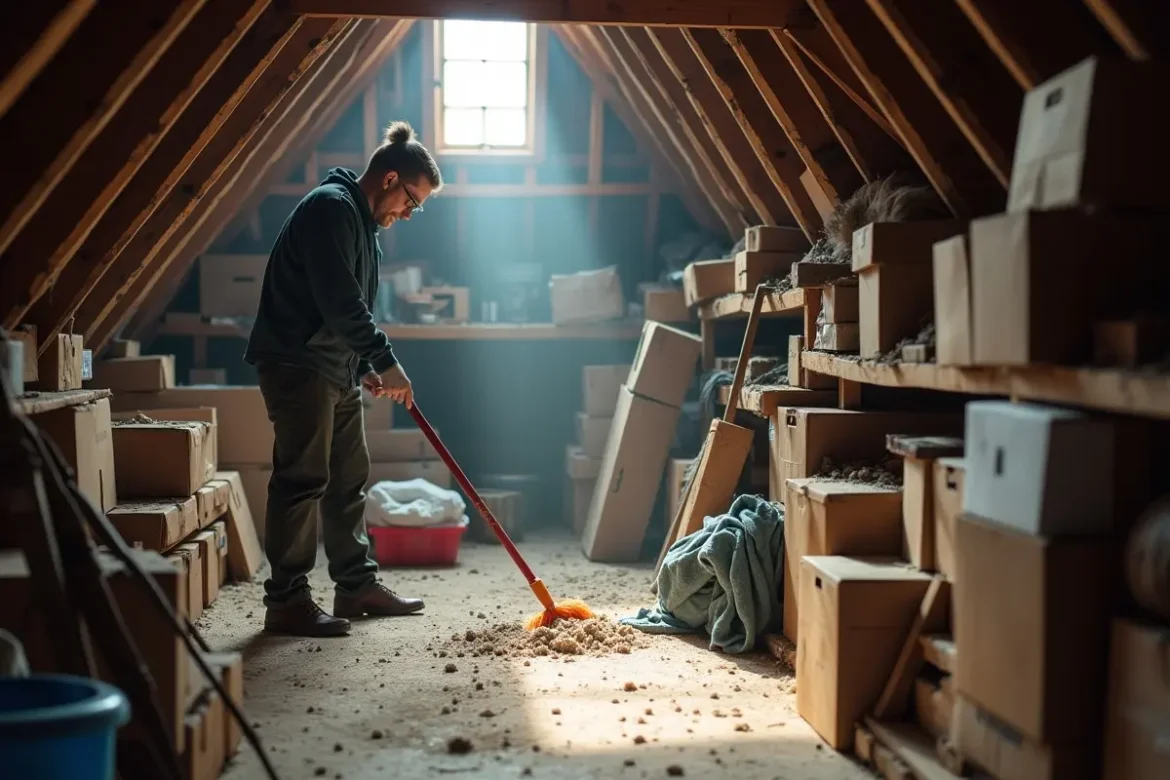
If you live in Houston, you know what stepping outside between May and September feels like. The air hits you like opening an oven door. Inside your house, things stay cool thanks to your HVAC system. But what about the space between the ceiling and your roof?
That attic absorbs heat, traps moisture, and becomes a breeding ground for problems most people never see until it’s too late. The question of how often Houston homeowners should clean their attics doesn’t have the same answer here as it does in, say, Denver or Portland.
Our climate changes the rules completely. This guide explains how often to clean, why Houston conditions make it urgent, what warning signs to watch for, and what professional attic cleaning actually involves.
Contents
How Often Should Houston Homeowners Clean Their Attics?
Here’s the short answer: at least once a year. That’s the bare minimum. For most Houston homes, twice a year is smarter. Plan one cleaning in late winter or early spring (February through March) and another in the fall (October through November).
Why? Because Houston’s climate speeds up the rate at which attic spaces accumulate moisture, mold, pest droppings, and degraded insulation. Average humidity hovers around 75% year-round. Summer attic temperatures routinely hit 95°F or higher. Combine those two conditions, and you get an environment where contamination builds up much faster than it does in drier, cooler parts of the country.
Homeowners in other states might get away with annual cleanings. Here, that schedule doesn’t cut it. If your house has certain risk factors, you may need to inspect the attic even more often, maybe every three to four months. Quality Air Duct Cleaning Houston works with many homeowners facing these exact issues, especially those dealing with the compounding effects of high heat, humidity, and storm exposure on insulation and air quality.
Here are the situations that call for more frequent attention:
- Homes near bayous or flood-prone areas
- Properties that experienced hurricane or storm damage
- Homes with known or suspected rodent activity
- Older insulation (10+ years)
- Visible mold or musty odors in living spaces
If any of those describe your home, waiting a full year between cleanings puts your indoor air quality and energy bills at risk.
Why Houston’s Climate Makes Attic Cleaning More Urgent
Let’s talk about why Houston is different. We live in a subtropical climate. That means warm temperatures most of the year and humidity that doesn’t quit. Summers bring extreme heat. Attic interiors can easily reach temperatures well above what you experience outside. Pair that with moisture levels that rarely drop below 70%, and you create the perfect conditions for three major attic problems: mold, pests, and failing insulation. These issues develop faster here than they do in most other parts of the country. Here is why.
Mold and Mildew
Houston’s damp, warm attic air gives mold spores everything they need to grow. Mold doesn’t just stain wood or insulation. Once it establishes itself in your attic, it can spread into your HVAC ducts and circulate spores through the living areas of your home. The tricky part? Mold in attics isn’t always visible from below. Many homeowners don’t know they have a mold problem until they schedule an inspection or start noticing health symptoms like coughing, sneezing, or headaches that don’t go away.
Pest and Rodent Activity
Houston’s warmth and humidity attract a long list of attic pests: rats, mice, cockroaches, carpenter ants, silverfish, and spiders. Rodents, in particular, love attics. They move in when the weather shifts, especially during fall and winter. Once they settle, they leave behind droppings, urine, chewed wiring, and torn-up insulation.
These are not problems you can handle with a broom and a trash bag. Professional remediation is the only safe way to address contamination from rodent activity. And let’s not forget: Houston’s hurricane season, which runs from June through November, often drives pests indoors as rising floodwaters force them out of their outdoor habitats.
Insulation Degradation
Insulation works by trapping air. When insulation absorbs moisture, it loses that ability. Houston’s moisture-heavy air causes attic insulation to degrade over time. Wet or compressed insulation can’t regulate your home’s temperature the way it should.
That forces your HVAC system to work harder, which shows up on your energy bill every month. The U.S. Department of Energy states that poor attic insulation accounts for significant energy loss in homes, and that problem gets worse in climates with extreme heat like ours.
Signs Your Houston Attic Needs Cleaning Now
Sometimes you can’t wait for your next scheduled cleaning. Certain warning signs mean you need to act now, not next season. Here’s how to know if your attic has crossed that line.
- A musty or unusual odor coming from vents or upper floors
- Noticeably higher energy bills without an obvious cause
- Visible mold or dark staining on attic wood or insulation
- Evidence of rodents, such as droppings, gnaw marks, nesting material, or scratching sounds
- Insulation that looks compressed, wet, or discolored
- Recent storm, roof leak, or flooding event that may have introduced moisture
- Allergy symptoms are worsening at home without a clear cause
If you see any of these signs, don’t wait. Scheduling a cleaning six months from now won’t fix a problem that’s already affecting your health or your utility costs. These are conditions that need immediate attention.
What Does a Professional Attic Cleaning Include?
If you’ve never hired someone to clean your attic, you might be wondering what the process looks like. Professional attic cleaning isn’t just sweeping up dust. It’s a detailed service that addresses contamination, safety, and prevention. Here’s what it typically covers.
Technicians remove debris, old insulation, and contaminated materials. They inspect for mold, moisture damage, and pest entry points. If rodents have been present, the space gets sanitized and decontaminated. Gaps or entry points get sealed to prevent future pest access. Ventilation gets checked, and recommendations are made for insulation repair or replacement if needed.
Why does professional-grade equipment matter? Standard vacuums and cleaning tools can spread contaminants into your living space instead of removing them. Professional vacuums are designed to contain dust, mold spores, and pathogens without releasing them back into the air. Tasks like removing damaged insulation, handling mold remediation, and decontaminating spaces after rodent activity should never be DIY projects. Airborne pathogens in these environments pose real health risks if you don’t have the right protective equipment and training.
Next Steps for Houston Homeowners
Houston’s climate is unique. Persistent humidity, extreme summer heat, and year-round pest pressure mean your attic can’t be treated like attics in cooler, drier climates. Most Houston homeowners should clean their attic at least once a year, ideally twice.
Add extra inspections if you experience storm damage or see any signs of pest activity. Letting the attic go unchecked isn’t just about cleanliness. It affects your health, your energy costs, and the structural integrity of your home. The longer you wait, the worse these problems get.